Accessible
Can search engines access the website?
Can users quickly find what they need?

SEO & AI SEARCH
Search is changing.
Customers still use Google and other search engines, but they also ask AI assistants questions, compare recommendations and discover businesses through increasingly varied search experiences.
The fundamentals still matter. Your website needs to be technically accessible, clearly structured, relevant to what customers are looking for and useful enough to deserve attention.
MiBanana combines practical SEO with a measured approach to AI-assisted discovery. No magic GEO formula. No guaranteed rankings. Just stronger foundations, clearer content and deliberate organic growth.
Customers do not all discover businesses in the same place anymore. A potential customer might search Google, use Maps, ask an AI assistant, compare an AI-generated summary, read an article, find a specialist page, return through branded search or ask a more specific question later.
Businesses need websites that are easy for people and machines to understand.
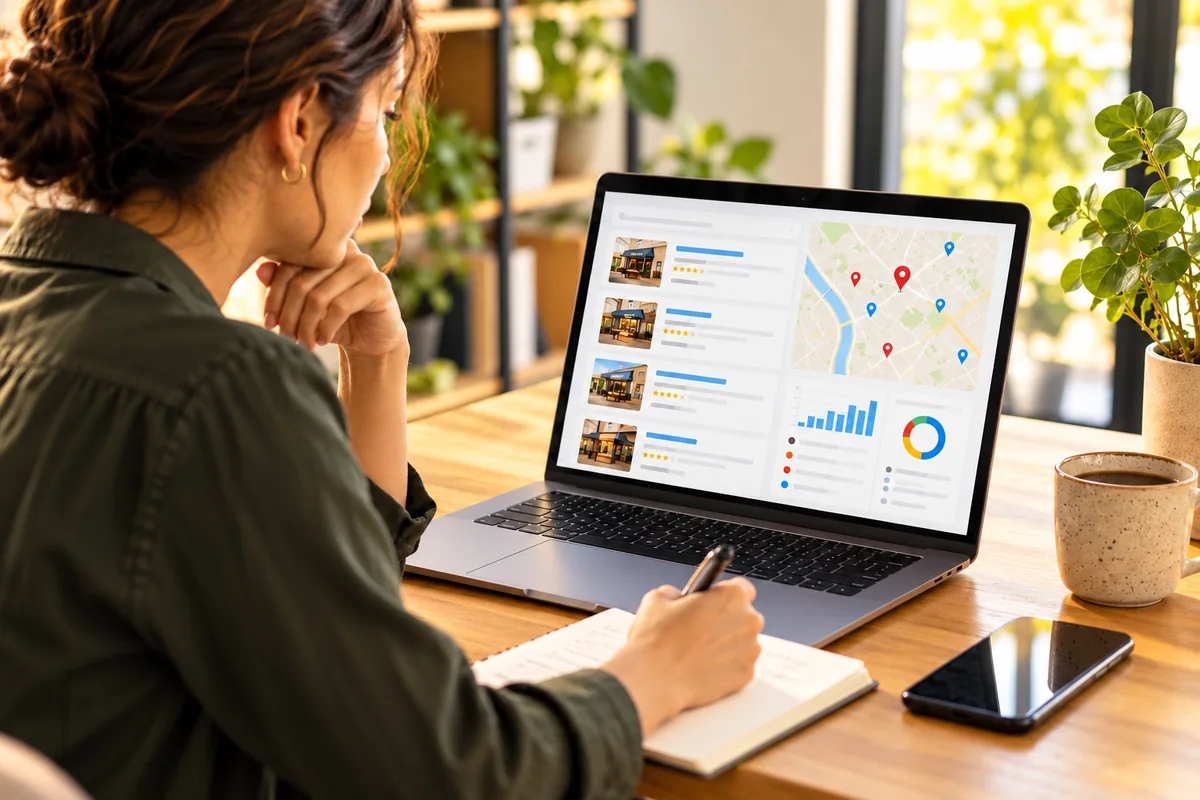
Search engines, Maps or an AI assistant.
Compare a summary, article or specialist page.
Return through branded search or ask a more specific question.
Good SEO is mostly disciplined work done consistently.
Can search engines access the website?
Can users quickly find what they need?
Can they understand what each page is about?
Are pages connected logically?
Does the website answer questions customers genuinely have?
Are important topics supported by useful content?
Does the website demonstrate relevance and credibility to compete?
Plan the pages and information customers need.
Make the website structured and accessible to search systems.
Support useful discovery and understand what is happening.
Ranking for a phrase is not useful if the visitor wanted something else. We use intent to decide which pages should exist, what each page focuses on, which topics belong together or need separate pages, where supporting content helps, how pages link and which searches have genuine commercial relevance.
What did the visitor actually want?
What should this page answer?
Where can the visitor go from here?
Technical work should be based on evidence rather than a checklist designed to make an audit look impressive.
Important commercial topics deserve clear destinations. Supporting topics should reinforce them rather than compete with them.
More content is not automatically better. Content should serve a real purpose: answer a buyer question, support a commercial service, explain a difficult decision, capture meaningful intent, demonstrate expertise, support internal linking, help a customer or provide useful evidence.
Every important page needs a clear job. Optimisation can include purpose, intent, topic focus, title tag, meta description, H1 and heading structure, body content, supporting terminology, internal links, calls to action, structured data, images and alternative text where appropriate.
Structured data can help search systems interpret page information. Depending on context this may include Organization, WebSite, WebPage, Service, Article, BreadcrumbList, FAQPage or LocalBusiness where genuinely applicable. Structured data does not create facts.
Generative Engine Optimisation is not a magic second version of SEO. Useful ideas include clear explanations, topical relevance, accurate information, logical structure, consistent business entities, useful supporting content, appropriate structured data, clear authorship and ownership where relevant, accessible pages and legitimate independent references.
Traditional search commonly presents links. AI-assisted systems may summarise information, compare sources, answer directly or present citations. That changes the presentation layer, not the need for trustworthy, accessible information.
There is no button that guarantees an AI assistant will cite a business.

Can include location-focused structure, Google Business Profile optimisation, local business information, consistent contact data, relevant local pages, review strategy, local structured data and content connected to genuine local services.
Do not create hundreds of thin city pages simply to target location names.
May need to consider markets, languages, search behaviour, local terminology, URL architecture, hreflang, regional differences, localised services, translation workflow and competition.
Ask whether content is accurate, useful, original enough to justify publishing, reflective of the business, checked, responsive to a real customer need and additive to what already exists.
AI can assist research, analysis, outlining and drafting. Publishing unreviewed generic output at scale is not a search strategy.
TRANSPARENCY
We can improve technical foundations, content, structure, clarity and machine readability. We cannot force Google or an AI system to rank, mention or cite a business.
No.
No.
SEO can begin as a project and continue as a growth programme. Ongoing SEO belongs within Growth, not MiBanana Care.
Final scope depends on the current website and growth requirements.
FREQUENTLY ASKED QUESTIONS
SEO traditionally focuses on visibility in search-engine results. AI-assisted discovery may summarise, compare or answer directly. They overlap, but are not identical.
GEO commonly means Generative Engine Optimisation. Useful GEO practices overlap heavily with good SEO and content strategy.
No.
We can improve clarity, accessibility and quality of information. We cannot guarantee a mention or citation.
There is no universal timeline.
Yes.
Yes, where content production forms part of scope.
AI can support research, analysis and drafting. Published content should still be accurate, relevant and worth reading.
Yes, where location genuinely matters.
Yes.
Yes.
No.
Yes, as one technical and user-experience consideration.
Search considerations should be incorporated before URLs, content and architecture are changed.
The measurement depends on the business objective.
Some work can be project-based. Competitive organic growth is usually ongoing.
SEO & AI SEARCH
Search will continue to change.
The businesses in the strongest position will still need to explain what they do clearly, publish information worth finding and maintain websites that machines and people can understand.